
 Sign in
12 June 2025
Read time: 5mins
‘Reviewing a whole year’s geography curriculum can seem daunting so you need to have a cunning plan on how to get the best out of your task.’
Paula Richardson
It’s nearly that time of year again! As subject leader you will probably be planning to visit your geography curriculum and decide on changes you would like to make for the next academic year.
Over the past few years for a variety of reasons, the time and prominence given to geography has often been limited with neither the time nor space in the curriculum to allow it to develop to its full potential. So, one of the important things for you to consider alongside the topics chosen is how to maximise the use of geography elsewhere through links with other curriculum areas and cross curricular links.
Reviewing a whole year’s geography curriculum can seem daunting so you need to have a cunning plan on how to get the best out of your task. First, there may be some parameters for you to work in – there might be recent national changes to the curriculum or the school development plan to consider.
After identifying these to provide your planning with a context, it would be useful to remind yourself as to the features of a good geography curriculum to help focus your attention on what you need to include:
- recognise that pupils will have their own experiences, knowledge, and views of the world
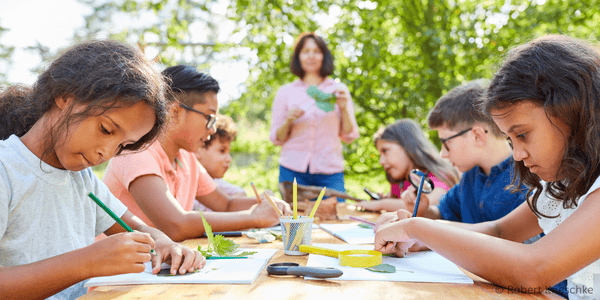
- it is important to provide pupils with practical experiences out of the classroom whenever possible
- provide pupils access to a wide variety of accurate and up to date resources – remember geography is a fast-changing subject, the world does not standstill
- use all the practical resources you can find especially maps which can open a different world for many pupils
- identify the range of skills and knowledge the pupils need to acquire and integrate into topics as much as possible
- provide activities which are enquiry based and encourage pupils to look for issues, ask questions and analyse their findings
- provide a range of topics for study which are interesting, fun and stimulating for everyone
- try to ensure that any assessment tasks are meaningful and inspire pupils.
So, what do you need first in order to consider changes or modify the existing curriculum?
Ask the staff
It is important that you tap into how staff feel about the geography they taught this year. They will have useful information about the topics they taught. They may well have felt less comfortable about some of them if, for example, they lack a geography qualification and as a result, a wider background to some of the topics. A short staff survey may provide you with helpful information to support your review.
Success or otherwise of the topics
Find out about how successful or less successful the topics were. Was this because of the resources or lack of them, or was it that the topic didn’t really stimulate pupil interest? You may need to consider how long these units have been used – is it time for a change? Are you using an off-the-shelf scheme or home-grown units? Mixing and matching can be a good way forward.
Is something being missed out?
Are there some activities, be they physical or human, which would make an interesting topic to study? Are the examples of the earthquakes being used rather old, are there some more recent ones you could introduce? Could the parents of pupils provide interesting information about other places and cultures?
Using your local area
This can be a rich resource and easily accessible to classes. Everywhere is interesting and even if at first glance you feel there is little worthwhile to study, take a closer look.
Fieldwork doesn’t have to mean the whole class going out at the same time: investigations can be done in small groups or even in the home area with results being brought into school to share. However, it is also important to try and show pupils a different location at some point in their work to expand their understanding of the world around them. Many ideas to help you can be found on the GA website’s National Festival of Fieldwork page.
Cross curricular topics
Many of these have a geographical flavour, looking after the environment, investigating issues, citizenship and cultural diversity, amongst others. There are opportunities for developing geographical thinking in all of these topics. An interesting approach is to ask the classes about what’s happening in the world at the beginning of the lesson and taking a moment to locate the places mentioned on a map. All classrooms should have a globe, a world map and usefully, an OS map of the area!
Remember that activities such as painting Japanese symbols, cooking food from another country or learning a dance from Spain only really become geographical in nature if the activity is linked to finding out about the country and its landscapes, both physical and human.
If you are looking for inspiration on how to develop links between geography and other subjects such as art, history, mathematics, as well as fieldwork and maps, you might like to visit the GA shop and have a look at the series entitled The Everyday Guide to Primary Geography.
This series offers creative and enjoyable activities to stimulate, enliven and enrich geography at key stages 1 and 2. It demonstrates a wide range of practical classroom strategies to develop pupils’ geographical thinking, knowledge and understanding, and to extend their geographical skills. A bonus is that you can download additional activities, key vocabulary, examples of pupils’ work and cross-curricular ideas.
View The Everyday Guide to Primary Geography series here.

Written by Paula Richardson
Paula Richardson is an author, education adviser and trustee of the GA, member of the Publications Board and Fieldwork and Outdoor Learning SIG (FOLSIG).
© Paula Richardson, and the Geographical Association, 2025


