
 Sign in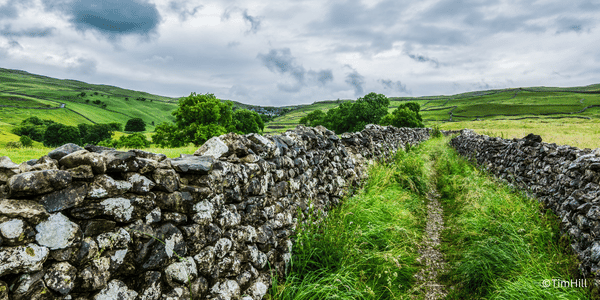
14 March 2025
Read time: 5mins
‘We were awarded the Gold PQGM after a moderation interview that was possibly some of the best CPD I have been involved with as a subject leader.’
Clare Furniss
A self-confessed ‘geographobe’
As a first-time applicant for the Primary Geography Quality Mark (PGQM) three years ago, I was a self-confessed ‘geographobe’ who did not understand why this subject was in the curriculum. My own experience of it at school had been of colouring maps of far-off lands that meant nothing to me, and learning about clouds, which seemed a bit pointless at the time.
I had inherited geography as a subject lead in primary school, and the PGQM seemed like an opportunity to have a goal to work towards as I started putting a toe back into the water of a subject I had resolutely given up before GCSEs in favour of ‘proper sciences’.
The training I received one afternoon in early May of 2021, via post COVID-19 virtual delivery, was enough to make me sit up and look at geography as a concept with new eyes, as I was introduced to the key ideas of place, space and scale.
The very thought that a geography journey for a child could actually start in the school grounds appealed to the enduring seven-year old part of me that could not even begin to imagine why I would want to learn about farming in Asia or rivers in South America.
I signed up for the PGQM with the hope that the notion of ‘oh, that makes sense now’ would continue as I was guided through the process by the wonderfully passionate primary team at the Geographical Association.
Dispersing mystique and growing in confidence
The journey that we went on over the next year as a school was enlightening, and the mystique surrounding the subject disappeared as staff grew in confidence. Staff began delivering lessons that inspired children to engage with their surroundings and really start to make sense of their place in the world.
Pupils learned how they could make a difference to what happens to the planet as they grow into the global citizens of the future that we, as a profession, are committed to supporting.
By September 2021, myself and my co-subject lead had arranged for the whole staff to access training in fieldwork on the first day back as we launched our bid to achieve the PGQM. The buzz surrounding that day was incredible, with the whole staff embracing the idea that geography starts at home.
PGQM journeys within the school fence
We had planned whole-school enquiries for the autumn term in the school grounds by the end of the day, and had committed to supporting each other as many of the themes overlapped year groups to begin with; Y6 and F1 alike were starting their journey of geographical discovery within the boundaries of the school fence.
It quickly became apparent that the children were passionate about the effects of global warming on the local wildlife, and we ‘adopted’ a sloth in Costa Rica to link this globally to help with their sense of place and scale. We were able to interact with our sloth via the magic of Skype, and this opened up questions about time zones – we were only able to call them at 3pm our time if they opened early for us at 8am their time!
The children wanted to focus on what they could do to help the local environment, and this was reflected in walking challenges, litter picks and the creation of our eco-committee, who were passionate about supporting us to save energy by monitoring the use of lights, closing doors to conserve heating and so on.
Pupils got parents on board with ideas for how to decrease the use of single-use plastic in lunch boxes, and the enthusiasm for learning about the delicate balances and interactions at play between humans and their environment became meaningful for children and inspired their teachers to develop the curriculum based around their interests.
Making investigation questions relevant for pupils
The Year 5 residential that year became not just ‘a visit to North Yorkshire to take part in fabulous outdoor activities’, but sparked questions about the surroundings: ‘Why are the fields marked out with walls not fences?’; ‘Why are there so many small bridges?’; and ‘Why are there so many sheep?’
These questions were investigated on returning to school and the children undertook challenges to think about where they would put bridges in their hometown to improve links between rail, ports and local industry.
If we had posed those same questions to pupils ‘cold’, with no concept of place or space, they would likely have been as meaningful as my childhood lessons on clouds.
Mapping a curriculum with the Gold PGQM
As a result of the dedication of the staff team to mapping a curriculum that would respond to the needs and interests of the children, we were awarded the Gold PQGM after a moderation interview that was possibly some of the best CPD I have been involved with as a subject leader.
It really homed in on what leaders of geography should be focusing on and came back full circle, just over a year later, to that May afternoon where I was first introduced to place, space and scale.
I often think back to that session when looking for where to go next when a teacher asks for support with planning an enquiry or series of lessons that have been sparked by children’s interests; primary geography really is all about imagining the world through the eyes of a child who is getting to grips with who they are and where they fit into the world around them.
With this viewpoint, it becomes easy to understand how a curriculum where children are given tasks to do that are not relatable to their everyday life may not lead to them falling in love with their part of the world and all that it means to them and their families on a daily basis.
As I move to a new school to take up a new position as a leader, I will take with me key ideas to engaging the children with this fabulous subject. Ideas that pupils are just as important as any other person on the planet and that their daily micro-interactions with their environment are just as newsworthy and relevant as any volcano erupting they may view on the news, as it can affect their life now and in the future and that geography really is for everyone.
The Geography Quality Marks are prestigious awards that recognise and promote quality and progress in geography leadership, curriculum development and learning and teaching in schools.
Find out more about the GA’s Primary Geography Quality Mark (PGQM)
 Written by Clare Furniss
Clare Furniss took up the appointment of Headteacher at Beckingham Primary School in January 2025 having previously been the Geography Lead and Head of school at St Oswald’s CofE Academy.
© Clare Furniss, and the Geographical Association, 2025


