
 Sign in
20 November 2024
Read time: 6mins
‘Together, we need to ensure that fieldwork, GIS and the other contributions that geography makes to young people’s education are all secure and given appropriate time to develop.’
Alan Parkinson
When I started my PGCE course at the University of Hull in 1986, my tutor, the late and rather wonderful Vincent Tidswell told us that we needed to join the Geographical Association, and I began to receive copies of the journal Teaching Geography, which had been launched in 1975 under the editorship of Patrick Bailey.
The ring binders of back issues of this journal were an important resource to access from the University library. The previous year the Head Librarian had retired after thirty years in the job: his name was Philip Larkin.
A statue of Larkin stands at Hull’s Paragon railway station – a place I was very familiar with back then as I travelled back home occasionally. There is no statue for Vincent – yet.
When I started my teaching career and secured a full time job in Norfolk, the department was already a member of the Geographical Association and I reacquainted myself with the journals and the ideas that they provided in each issue.
I knew there was a Geographical Association Conference each year, but it never occurred to me to go. I got on with getting used to teaching, which back then included handing out David Waugh’s Key Geography books or putting a VHS of Life on Earth on the big TV in the cage on the trolley, wheeled into the classroom to great excitement.
Within a few years, most of my teaching was A level teaching and I used textbooks written by people like Joy Tivy, Michael Bradford and others. Their connections to the wider subject association and the Royal Geographical Society (with the IBG) (which I knew was important for its support of exploration) were not something I knew much about.
In 2001 I started my GeographyPages website*, which became very popular. Those were the early days of the internet in schools, but I could see the potential for sharing what I was doing and connecting with other geographers.
*Although this site is no longer maintained, links to the Internet Archive can be seen at the original URL, thanks to Richard Allaway – http://www.geographypages.co.uk/
I trawled the internet for other geography websites and shared links to them and then to my own resources. The site became so popular – despite the slow pace of access with dial-up connections – that I kept having to increase the bandwidth on my website (at my own expense). There were others sharing their resources at the time such as David Rayner and David Robinson.
My first visit to the Royal Geographical Society (with the IBG) was as a consultant for The Guardian newspaper. They funded a project where they reviewed computer software at a time when BBC Micros were the main computers in schools. The event was a conference including the Ordnance Survey. I remember seeing a few colleagues who would later become friends.
I peered into the Map Room and saw the Everest model that was used to help Lord Hunt plan the 1953 attempt on the summit, and stood in the main hall handing out information to the delegates. I also attended BETT several times during this period, working for The Guardian and the DfE during the launch of the National Strategies.
This was a time of greater engagement with research too. I completed a Best Practice Research Scholarship on the impact of the early adoption of the internet in schools, supported by Liz Taylor at the University of Cambridge, and Tim Burt of the University of Durham, who had been my tutor for a while when I completed my degree at Huddersfield Polytechnic in the early 1980s. I was encouraged to continue this work, and to share my work in person by speaking to colleagues – something that didn’t come easy.
I was later invited to the Royal Geographical Society (with the IBG) to speak at a student event to suggest how different emerging social technologies as well as blogs might be helpful for students revising for examinations – a time before much of today’s social media and TikTok. One of the other speakers that day was Alastair Owens, before his own connections with the GA had developed. As you can see, the two organisations were becoming intertwined a little more.
The start of my teaching career in 1988 had coincided with a greater level of professional support for teachers. We had PDCs (Professional Development Centres)in Norfolk: one in King’s Lynn and one in Norwich, just off the ring road. We had an energetic county advisor called Rob Lodge who would organise events regularly. It was here that I met other colleagues for the first time and was encouraged to share what I was doing.
The annual conferences were held at Barnham Broom, just outside Norwich. I was very excited one year because the guest speaker was Chris Durbin. He and Kate Russell and another colleague had created a bulletin board style website called the Staffordshire Learning Network (SLN) and this had become a place where I and others could network and share ideas and feel that there was somebody else who shared the same views (or disagreed with them). This put me in touch with a whole range of teachers. Another guest to the conference was Diane Swift, who was heavily involved with the GA’s work at the time, and continues to be influential in her work.
Rob told me one day that there was a position empty on the GA’s Secondary Phase Committee (SPC). This was an exciting time, and on the train journeys down to London for our meetings at UCL at the Institute of Education we would discuss what it might be like to develop the work I was doing. I remember my first meeting, with Alan Kinder and Sarah Watts in the chair.
I was one of the few teachers on the committee and a lot of the discussions went flying over my head, but I enjoyed being part of the committee, which I served on for the next 14 years. In 2004, I attended my first GA Conference in Canterbury as a delegate – meeting up with Chris Durbin and fellow ‘SLN’ers, and the following year I was part of a group of SPC members presenting at the University of Derby.
In 2004, Stephen Twigg, the Parliamentary Under-Secretary of State for Schools gave a keynote address at the GA’s Annual Conference. Amongst other things he announced funding of £100,000 for a programme to support school geography. This was the first of a series of extra projects where the government invested in school geography.
I became an RGS (with IBG) Chartered Geographer in 2007, finding it a useful activity to both log my CPD activity but also challenge myself to exceed the minimum requirements by as much as possible. In the same year, a new curriculum support package was revealed for teachers. Ruth Totterdell and David Rayner were announced as the national leads, with the project funded by CfBT.
In February 2008, I became involved in an Eastern Region event with over seventy Heads of Geography. I talked about the importance of being “creatively subversive” and produced my infamous ‘Never gonna give you up’ film, with Rick Astley’s song playing over a montage of case studies and topics which should have been consigned to history long ago, but somehow persisted. Sadly some of them still do even now.
I also joined the team which was writing books for the GA’s KS3 Geography Toolkit series. By now, some of the names that had only previously been on textbooks I used were becoming friends and colleagues as I engaged with the work of the GA.
David Lambert – then Chief Executive of the GA, and Rita Gardner, Director of the RGS (with IBG) had joined forces to lobby for further support and the outcome was the Action Plan for Geography whose first phase had started in 2006. In 2008 more funding was provided to extend the Action Plan to 2011.
As a result of the extra funding an opportunity arose that I had to go for, despite my nerves at putting myself forward. It was for a Secondary Curriculum Leader role as part of the second phase of funding for the Action Plan for Geography. I had my interview at Solly Street in Sheffield – a city I was very familiar with having grown up a few miles from there. The panel included Margaret Roberts, Peter Fox and John Lyon, along with David Lambert who would be my new boss.
Later that day I was told that the job was mine. After over 20 years as a teacher, I had a new career and spent the next three years travelling the country, and Europe ‘doing geography’: leading hundreds of events and talks, visiting many schools and university geography departments, speaking at GA branches and RGS (with IBG) events, and writing resources as well as advocating for the subject with a range of organisations.
I shared an office with John Lyon, and every day was varied and exciting. I learned so much from my time there, and had the opportunity to make new connections, and start my writing ‘career’ which now includes over thirty books which I have written or contributed to.
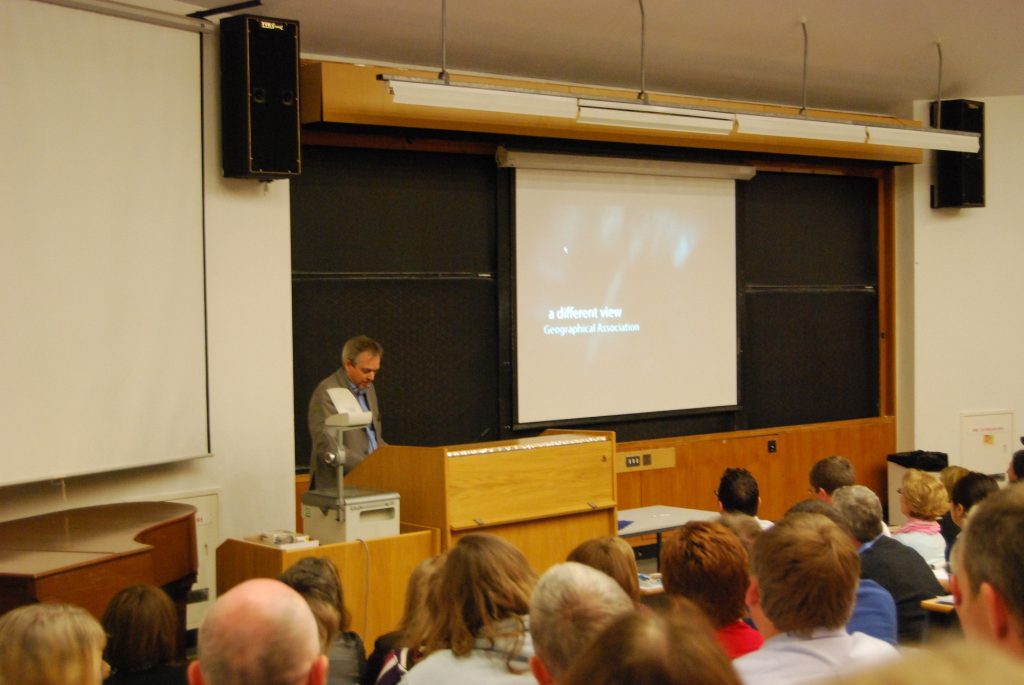
The three years I spent on the GA’s Action Plan for Geography team led me to take part in hundreds of events the length and breadth of the country, and regular coordination meetings with RGS (with IBG) colleagues including Steve Brace and Claire Brown, and to create the video which was used to launch the 2009 manifesto ‘A Different View’. In 2011, the funding ended, and with it – rather suddenly – my job.
I turned to the network that I had built over the years, and immediately found they came up with some work for me. Steve Brace was one of those who came to my aid. The GA and the RGS (with IBG) both supported me through the next two years until Claire Kyndt – a teacher who I had met through a GA Primary event – invited me to come and work at King’s Ely school, and I returned to the classroom. I also continued my involvement in ERASMUS+ funded projects, until Brexit brought that to an end.
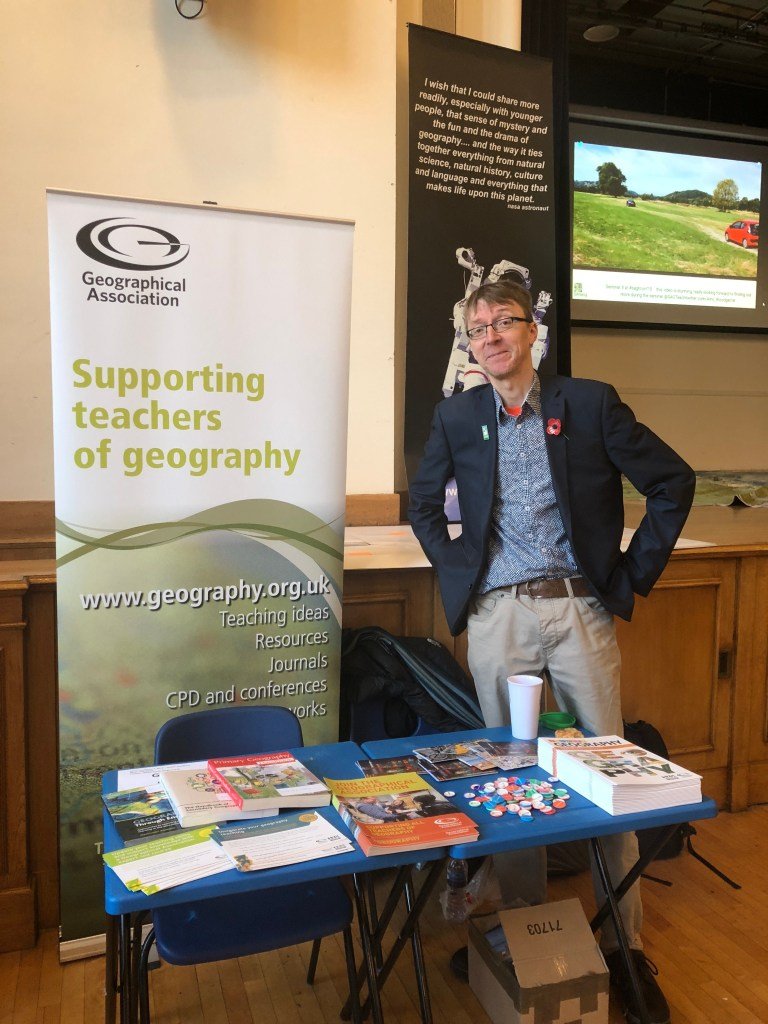
I interviewed all living former Presidents and will maintain this going forward. As I did this project over 18 months, I discovered that there were a large number of people through the first half of the 20th century in particular who had been Presidents of both organisations, or held significant posts e.g. (Honorary) Secretary or Librarian. Some of these such as Hugh Robert Mill are intricately tied up with the GA and also the early exploration background of the RGS, particularly in Polar regions. There are a great many stories shared on the blog.
Bonus points if you can name any of the people who have been Presidents of both the GA and the RGS (with IBG). Answers at the end.
A Routes journal article on this research provides a great deal more information on the methodology and some of the interesting stories I uncovered. I was also involved in efforts to increase the diversity of speakers at the GA Conference, and those within the GA itself. Nobody who was there will forget Iram Sammar’s TeachMeet presentation in 2022. There is plenty more work still to do in this area of course, but we are starting to make some headway in this area, and Presidents after me – Alastair Owens, Denise Freeman and now Hina Robinson – are continuing this work.
Through 2023-24 I worked as an author and reviewer on a major project to produce a suite of resources for primary geography for the Oak National Academy. These were produced by the Geographical Association, and the secondary resources are currently in preparation. The primary resources are now available to use by colleagues.
I also started work with Rayburn Tours supporting school groups in Iceland – something which is used as a ‘recruitment’ opportunity alongside helping staff and students interpret the remarkable landscapes we are fortunate to spend time in, complete with the Northern Lights on my most recent visit and many previous ones. Each trip is a chance to upskill myself and share knowledge of this place.
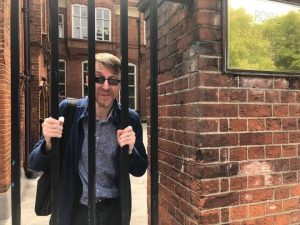
Work is ongoing to increase diversity in this organisation too – I recommend a visit to ‘the Home of Geography’ to see the current work to update the major spaces at the HQ in Kensington. The recent addition to the Map Room by artist Hormazd Narielwalla is an example of the changes being made.
This has been a very partial look back at some elements of my career to date. I’ve recently presented at several events where I have started to look back and reflect on the changes in geography since 1988, when I started teaching, and GCSEs were introduced.
As we move towards the new Labour government’s Review of Curriculum and Assessment under Becky Francis, the GA and RGS (with IBG) will both be important in helping shape the geography curriculum for the next few decades.
Together, we need to ensure that fieldwork, GIS and the other contributions that geography makes to young people’s education are all secure for the next generation and given appropriate time to develop and adapt to the future world our young people will grow up in.
To conclude:
Do we need both organisations? Absolutely! Now more than ever.
Even if they do the same things? Well, I don’t think they do, and certainly not in the same way. Each of the organisations has a different team of staff and volunteers who would approach a project differently – albeit always with creative and authentic geographers at the heart of what they do. The Action Plan for Geography showed how there were differences in the support for KS3 geographers but always with the same core values underpinning the work.
Why are they so important? There are times when the subject community will need us to work together, and at other times, there may be projects whose funding would be best secured by working on a joint bid. The GA’s support for teachers to engage in ‘curriculum making’ is vital, backed up by the RGS’s subject updates and joint work with ESRI to offer GIS courses at the RGS (with IBG) HQ. As the RGS (with IBG) moves towards its bicentenary in 2030, there will be plenty more to come.
Should I be a member of both organisations? These are tough times financially for many schools, so this is a decision for you to make. There are benefits to engaging with, and supporting the work of both organisations. Look for opportunities to get involved, volunteer your time, attend a GA Branch or RGS (with IBG) Regional Committee event and wear your ‘Geographer’ badge with pride.
Links
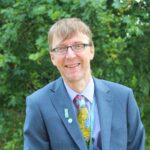 Written by Alan Parkinson, Head of Geography, King’s Ely Prep Vice President: Education – Royal Geographical Society (with IBG). Formerly GA Secondary Curriculum Leader 2008-11.
Answer to quiz question:
The people who have been Presidents of both organisations are:
- Douglas Freshfield
- Charles Close
- Dudley Stamp
- Harry Lindsay
- Michael Wise
- Thomas Holdich
- Lord Nathan
Sidney Wooldridge was also the President of the IBG but not the RGS.
© Alan Parkinson and the Geographical Association, 2024


